
Hydration for Athletes: How Water Supports Performance and Joint Health
Medically reviewed by Dr. Munif Hussain
Sports Medicine Physician at South Island Orthopedics
Team Physician and Primary Care for Molloy University Athletics
If you’ve ever hit a wall during a workout, finished practice with a headache, or felt more sore than expected, dehydration may be part of the reason. Water does more than satisfy your thirst. It helps your muscles, joints, and body work the way they should during and after exercise. Even mild dehydration can begin affecting physical and mental performance before you feel thirsty. Even losing a small amount of water through sweat can affect how you feel and perform.
Whether you’re training for competition or staying active recreationally, consistent hydration helps support physical performance throughout the day.
Knowing how hydration affects your body can help you stay healthier and perform your best during exercise.
What Athletes Should Know About Hydration
- Thirst is often a delayed signal, meaning fluid loss has already begun by the time you notice it.
- Water helps muscles, cartilage, and joints function efficiently during activity.
- Even mild dehydration can increase fatigue and make exercise feel more difficult.
- Consistent hydration supports both athletic performance and recovery.
Why Waiting Until You’re Thirsty Can Hurt Performance
Although thirst naturally signals it’s time to drink, it often develops after dehydration has already started affecting the body.
By the time you feel thirsty, your body may already be running low on water. That’s why athletes shouldn’t wait until they’re thirsty to start drinking fluids. Johns Hopkins Medicine notes that dehydration can affect both physical performance and cognitive function, including concentration and coordination.
Summer workouts often make these effects easier to notice because the body loses fluid more quickly in the heat.
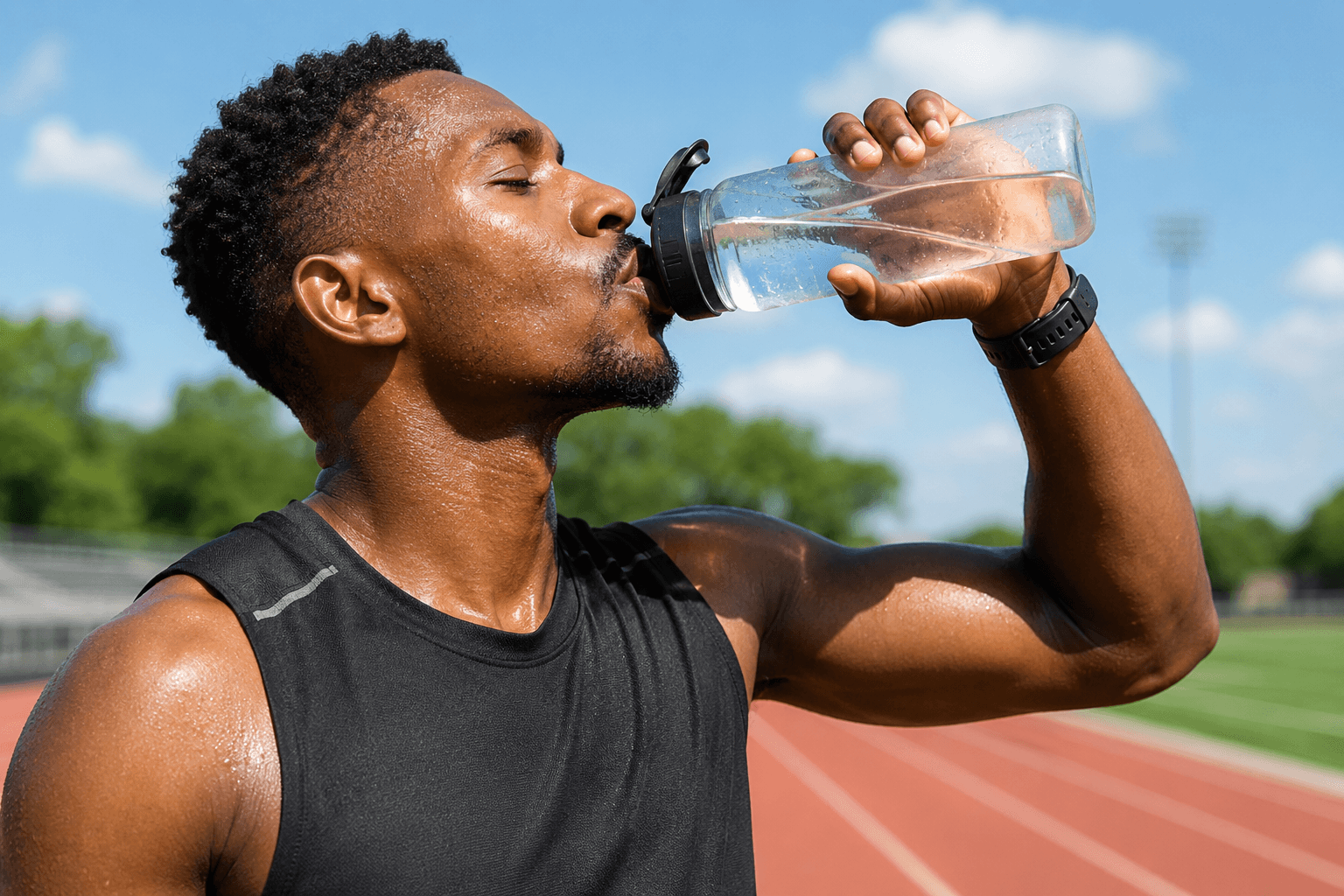
Athletes often lose significant fluids before they feel thirsty, especially during warm-weather workouts.
What Water Actually Does for Your Joints
Most athletes think about hydration in terms of energy and cramps, but it also helps protect your joints. Water supports the cartilage and synovial fluid that cushion movement and reduce friction during activity.
When you’re dehydrated, your body sends water to the organs that need it most. As a result, your joints may not stay as well lubricated, which can lead to stiffness after activity.
When fluid levels decline, the body prioritizes essential organs. Consequently, joint tissues can lose some of the lubrication that supports efficient movement. Some athletes notice increased stiffness or joint discomfort after prolonged activity when hydration has been inadequate.
Although hydration alone cannot prevent joint problems, it remains an important part of supporting healthy movement.
Did you know? By the time you feel thirsty, you’ve often already lost enough fluid to begin affecting athletic performance.
Why Dehydrated Muscles Tire Faster
When you’re dehydrated, your muscles have to work harder. When you don’t drink enough water, your heart has to work harder to move blood to your muscles. That can make you feel tired sooner during exercise. Dehydration may also affect flexibility, reaction time, and muscular endurance, increasing the risk of cramps, strains, and other activity-related injuries.
Common Signs That Hydration Is Affecting Performance
- Exercise feels harder than normal.
- Your pace or performance declines earlier than expected.
- You don’t feel fully recovered before your next workout.
- Concentration declines during training or competition.
5 Warning Signs of Dehydration Athletes Should Never Ignore
Recognizing dehydration early can help prevent it from affecting performance and recovery.
| Warning Sign | Why It Happens |
| 1. Dark yellow urine | The kidneys conserve water when fluid levels decrease |
| 2. Dry mouth | Total body fluid volume begins to drop |
| 3. Dizziness | Reduced blood volume affects circulation |
| 4. Muscle cramps | Your muscles don’t work as well without enough water and electrolytes. |
| 5. Headaches | Your body has a harder time cooling itself. |
If symptoms progress to confusion, loss of consciousness, or an inability to cool down, emergency medical attention is necessary.
Water, Sports Drinks, and Other Hydration Options
How much water you need depends on what you’re doing. For everyday hydration and workouts under an hour, water is usually enough. However, athletes participating in longer events or exercising in hot environments frequently lose both fluids and electrolytes through sweat.
Therefore, sports drinks can play a role during prolonged activity.
| Beverage | Best Use |
| Water | Daily hydration and workouts under one hour |
| Sports Drinks | Extended exercise and heavy sweating |
| Coconut Water | Light recovery hydration |
The right choice often depends on how long you’re exercising, how intensely you’re working, and how much you’re sweating.
A Smarter Approach to Hydration Before, During, and After Exercise
Good hydration begins before exercise—not after you feel thirsty. Drinking fluids consistently throughout the day helps you start workouts hydrated instead of trying to catch up afterward.
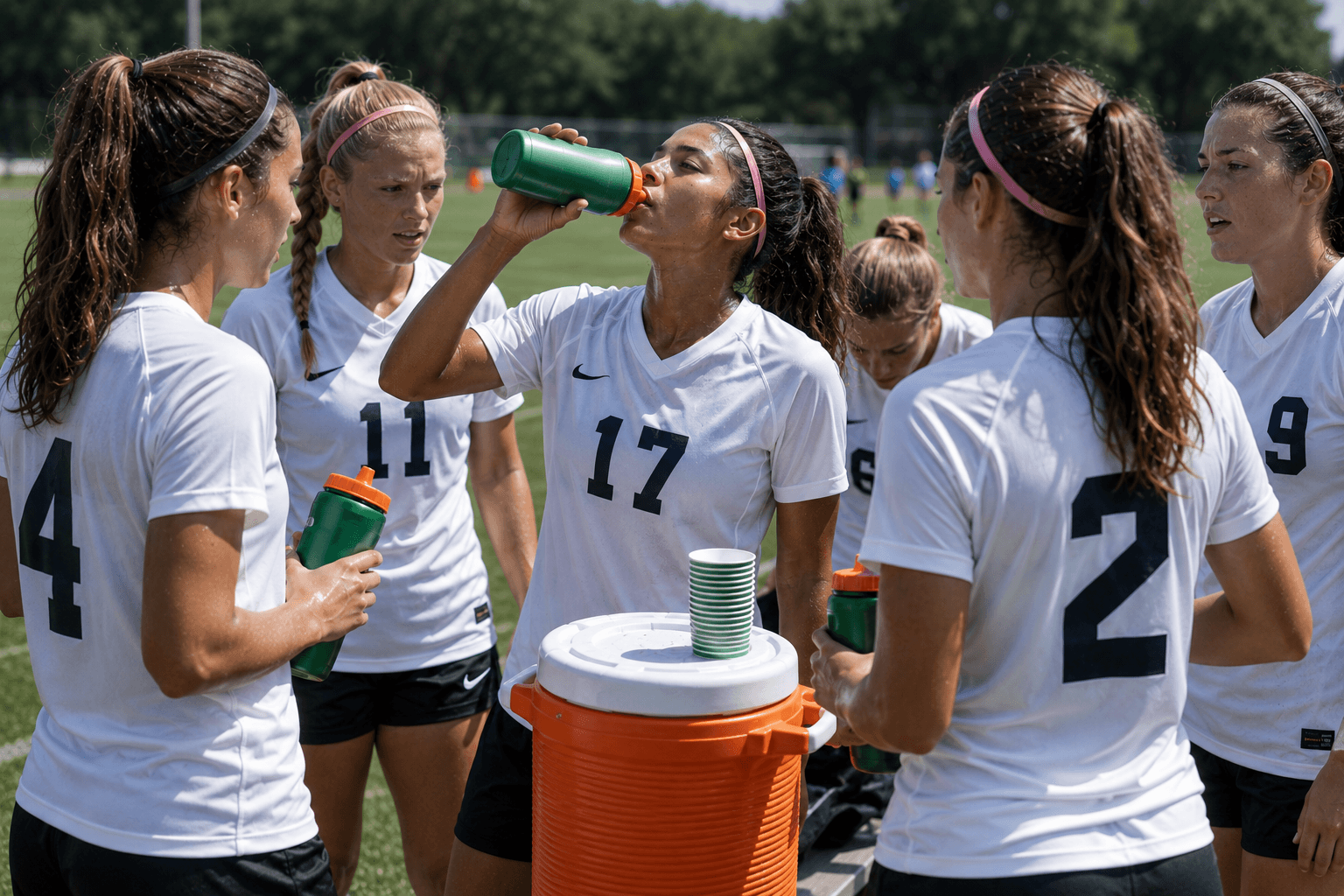
Soccer players pause to replenish fluids and electrolytes during warm-weather training.
Before Exercise
Entering activity well-hydrated helps support cardiovascular function, temperature regulation, and performance.
During Exercise
Drinking water during exercise helps replace what you lose through sweat and can help you keep going longer.
After Exercise
Drinking water after exercise helps replace the fluids you lost through sweat and supports recovery. Fluid needs vary based on factors such as exercise intensity, weather conditions, and individual sweat rates.
Does Coffee Dehydrate You?
No. For most healthy adults, moderate coffee consumption does not cause dehydration. While caffeine has a mild diuretic effect, the fluid in coffee generally offsets it.
However, athletes should prioritize water and appropriate electrolyte replacement during intense exercise and periods of significant heat exposure.
Can Drinking Water Lower A1C?
Some research suggests people who consistently drink enough water may have lower HbA1c levels, but hydration is only one part of blood sugar management. Water should not replace medical care, medications, or dietary recommendations.
Questions Athletes Ask Most
What is the best way to stay hydrated during sports?
Drink fluids consistently throughout the day instead of waiting until you’re thirsty. During longer workouts or exercise in the heat, replacing electrolytes along with fluids may also be beneficial.
During longer workouts or activities performed in the heat, replacing electrolytes lost through sweat can be just as important as replacing fluids. After exercise, continuing to drink water and replenish electrolytes helps restore fluid balance and supports recovery. The right hydration strategy depends on how long and intensely you exercise, the environment, and how much you sweat
Can dehydration cause muscle cramps?
Yes. During exercise, the body loses both fluids and electrolytes through sweat. When those losses are not adequately replaced, muscles may not function as efficiently, increasing the likelihood of cramping and muscle tightness. Dehydration can also accelerate muscle fatigue, which helps explain why cramps are more common during prolonged activity, hot weather, or intense workouts.
How do I know if I’m drinking enough water?
Light yellow urine, steady energy, and normal exercise performance are all signs you may be well hydrated. Dark urine, headaches, dizziness, dry mouth, or unusual fatigue may indicate it’s time to drink more fluids.
On the other hand, dark urine, frequent headaches, dizziness, dry mouth, muscle cramps, or feeling unusually tired can indicate that it’s time to increase your fluid intake. If you’re active or spending time outdoors in hot weather, paying attention to these signs becomes even more important because fluid losses can occur quickly through sweat.
Can dehydration affect joint pain?
Yes. Because cartilage and synovial fluid rely on water, dehydration may contribute to joint stiffness or discomfort after activity. While hydration alone won’t prevent joint problems, it supports healthy joint function.
What Is the Best Type of Water for Hydration?
For most people, plain water is an effective choice for staying hydrated. During prolonged exercise or heavy sweating, fluids that contain electrolytes may help replace sodium and other minerals lost through sweat.
Is it possible to drink too much water?
Yes. Drinking excessive amounts of water in a short period of time can dilute sodium levels in the bloodstream, a condition known as exercise-associated hyponatremia. This is most likely to occur during prolonged endurance activities when large amounts of water are consumed without replacing electrolytes lost through sweat.
Symptoms can include nausea, headache, confusion, swelling, and, in severe cases, seizures or loss of consciousness. While dehydration is a common concern for athletes, hydration should focus on replacing both fluids and electrolytes when appropriate rather than simply drinking as much water as possible.
Don’t Let Dehydration Sideline Your Summer
Whether you’re training for competition or staying active recreationally, consistent hydration supports endurance, muscle function, joint comfort, and recovery. Building healthy hydration habits can help you perform at your best before, during, and after exercise.
Building consistent hydration habits may help athletes maintain performance more reliably during training and competition. Furthermore, understanding how hydration affects the musculoskeletal system allows athletes to make more informed decisions before, during, and after exercise.
If recurring muscle cramps, sports injuries, joint discomfort, or performance concerns are limiting your activity, the Sports Medicine specialists at South Island Orthopedics can evaluate your symptoms and discuss treatment options that fit your goals.
Call South Island Orthopedics at 516-295-0111 or request an appointment and learn more about available sports medicine services.
Tagged with: Athletic hydration, Athletic Performance, Athletic recovery, Heat illness prevention, Hydration, Hydration and performance, Hydration and recovery, Hydration during exercise, Hydration for sports, Injury Prevention, Joint Health, Joint pain and dehydration, Muscle cramps and dehydration, Recovery, Sports drinks vs water, Sports hydration, Sports Medicine, Sports performance nutrition, Summer Sports, Sweat rate
Posted in: Sports Medicine