
Platelet-Rich Plasma (PRP) Therapy on Long Island
A Nonsurgical Option for Certain Tendon, Muscle, Ligament, and Joint Injuries
Expertly reviewed by Dr. Munif Hussain, DO, MS, CAQSM, Board-Certified Sports Medicine Physician
Quick Answer
Platelet-rich plasma therapy, or PRP, uses a small amount of your own blood. The blood is prepared so the platelets are more concentrated. The PRP is then placed into an injured tendon, muscle, ligament, or joint to support healing. It is used for many orthopedic problems, including injuries in the shoulder, arm, elbow, hip, knee, foot, and ankle.
When Is PRP Used for an Injury?
If you’ve already tried rest, medication, or physical therapy, you may be wondering whether there’s another option before taking the next step toward surgery.
Platelet-rich plasma (PRP) therapy offers a nonsurgical treatment option for many orthopedic injuries. The first step is finding the cause of your pain and deciding whether PRP fits your injury, goals, and overall care plan.
“We specialize both in non-surgical and surgical options for orthopedic care. PRP is one of the treatment options that is very, very popular.”
What Is PRP?
PRP stands for platelet-rich plasma. Plasma is the liquid part of your blood. Platelets are tiny parts of the blood that help with clotting. They also carry proteins that help the body respond to an injury.
PRP treatment starts with a small blood draw. The blood is placed in a machine that separates its parts. The platelet-rich layer is then collected and used for the injection.
Since PRP is made from your own blood, allergic reactions are uncommon. You may notice some soreness, swelling, or bruising after the injection, which usually improves as the area settles. Every injury heals differently, so the doctor will follow your progress and explain whether any other care is needed.

Blood contains plasma, red blood cells, white blood cells, and platelets. During PRP therapy, the platelet-rich portion is separated and prepared for injection.
How PRP Is Prepared and Injected
A PRP appointment usually includes the following steps:
- Blood draw. A small sample of blood is collected.
- Centrifuge processing. The blood spins for about 10 minutes so its layers separate.
- PRP separation. The platelet-rich portion is carefully collected.
- Ultrasound review. The doctor will use live imaging to view the injured tissue.
- Guided injection. The PRP is placed into the treatment area. Numbing medicine may be used to reduce discomfort.
“It’s going to spin for 10 minutes. When the spinning is done, then we’re going to isolate the PRP, and then we’re going to use that for the injection.”
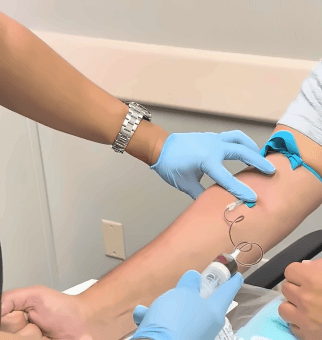
PRP therapy begins with a small blood draw. The sample is then processed to separate and concentrate the platelets used for treatment.
Why Is Ultrasound Used During a PRP Injection?
Ultrasound guidance allows the injured tendon, muscle, ligament, or joint to be viewed in real time. During the procedure, the image appears on a screen so the doctor can see the treatment area and guide the needle to the planned spot.
You may also be able to watch the screen as the injured area is explained. This can make the procedure easier to follow and help you understand where the PRP is being placed.
Conditions PRP Is Commonly Used to Treat
PRP is used for injuries in many parts of the body. Common examples include biceps and rotator cuff injuries, tennis elbow, knee arthritis, Achilles tendon problems, plantar fasciitis, and other muscle, ligament, tendon, or joint injuries. The right use depends on the exact injury and how it affects movement and daily life.
| Condition | Common symptoms | What the doctor checks |
| Tendon irritation | Pain with lifting, gripping, or activity | Irritation or a tear |
| Partial tendon tear | Pain, weakness, or limited movement | Tear size and location |
| Knee arthritis | Pain, stiffness, or swelling | Degree of joint damage |
| Muscle or ligament injury | Pain or weakness with movement | Stability and injury severity |
How PRP Helps the Body Heal
PRP brings more platelets to the injured area. Platelets carry natural signals that help the body start the healing process.
Over time, it can help reduce pain, improve movement, and make work, exercise, sports, and daily activities easier.
When PRP May Be Considered Before Surgery
For some patients, PRP can be another option before surgery. It is often considered when pain or weakness continues after rest, physical therapy, medication, or activity changes. The decision depends on the type of injury, how long symptoms have lasted, and how the problem affects work, sports, or daily life.
Partial tendon tears are one example. If the tendon is not fully torn, PRP may be used to support healing and improve strength or movement before surgery is considered.
Is Swelling Normal After a PRP Injection?
Mild swelling, soreness, or tenderness can happen during the first few days after a PRP injection. The area may feel more sensitive while the body begins its healing response.
Dr. Munif Hussain explains, “It’s going to get a little sore. The key thing is to let that inflammation do its trick.”
The amount of soreness can depend on the area treated and the type of injury. You will receive clear instructions about what to expect after the injection and when to contact the office if symptoms become worse or feel unusual.
Does PRP Therapy Work?
PRP therapy can help some patients have less pain and better movement. It has been studied for several orthopedic problems, including long-lasting tendon injuries and some joint conditions such as mild to moderate knee arthritis.
How well PRP works depends on what is causing the pain, what treatments have already been tried, your goals, and what other options are available.
How Long Does PRP Take to Work?
Some patients begin to notice less pain or better movement within 2–6 weeks after a PRP injection, with maximum benefits developing over 3–6 months. Other injuries may take longer, especially when a tendon, muscle, ligament, or joint has been painful for a long time.
Progress may show up in different ways. Lifting, reaching, gripping, walking, running, working, sleeping, or playing sports may start to feel easier as the injured area heals.
PRP vs. Cortisone Injections
PRP and cortisone are different treatments with different goals. One option is not always better than the other. The right choice depends on the injury, past treatments, health history, and treatment goals.
| PRP | Cortisone |
| Made from the patient’s blood | Uses steroid medicine |
| Aims to support the body’s healing response | Aims to lower inflammation and pain |
| Improvement may be gradual | Relief may occur sooner for some conditions |
| Results depend on the injury | Used for many painful or inflamed conditions |
| Often an out-of-pocket service | More often covered, depending on the plan |
What Happens if PRP Does Not Help?
If symptoms continue, the injury can be checked again and the next step can be discussed. This may include changes to physical therapy, another nonsurgical treatment, updated imaging, or a surgical evaluation.
South Island Orthopedics offers both nonsurgical care and orthopedic surgery. This makes it easier to move into a different type of care when needed without starting over at another practice. The treatment plan may change based on how the injury responds over time.
Frequently Asked Questions
Is PRP therapy painful?
You may feel some discomfort during the blood draw and injection. Numbing medicine can help make the injection more comfortable. Mild soreness, swelling, or pressure can continue for a few days afterward.
What should I avoid after a PRP injection?
Avoid heavy lifting, hard exercise, or activities that place stress on the treated area. The limits will depend on whether the injection was placed in a tendon, muscle, ligament, or joint. If needed, you will receive instructions for returning to work, exercise, and sports.
How many PRP injections will I need?
Some patients receive one PRP injection, while others need more than one. The number depends on the injury, the area treated, and how the body responds after the first injection.
Can PRP help a partial tendon tear?
PRP can be an option for some partial tendon tears. The decision depends on which tendon is injured, how much is torn, and how the injury affects strength and movement. A tendon that is fully torn often needs a surgical evaluation.
 Sports Medicine Care With Dr. Munif Hussain
Dr. Munif Hussain is board-certified in family medicine and sports medicine. He has advanced training in ultrasound-guided injections and treatments such as PRP therapy.
His approach focuses on helping patients understand what is causing their pain and which treatment options fit their injury. That may include PRP, physical therapy, activity changes, another nonsurgical treatment, or a surgical opinion when needed.
PRP Therapy at South Island Orthopedics
South Island Orthopedics offers both nonsurgical sports medicine care and orthopedic surgery. This gives patients access to a wider range of treatment options within the same practice as their needs change.
PRP injections are performed at the Cedarhurst office, and South Island Orthopedics serves patients from communities across Long Island. Evaluations, imaging, follow-up care, and other orthopedic services are also available through the practice.
Contact South Island Orthopedics to request an appointment. Call the Cedarhurst office at 516-295-0111 or the Rockville Centre office at 516-665-9200.
*This page is for education only. It does not replace medical advice, a diagnosis, or treatment from a healthcare professional. PRP may not be right for every person or every injury. A personal evaluation is needed before treatment.